Are you looking for information to help you repair log home leaks? Leaks in log homes typically occur when water enters through gaps in chinking, failed caulking, or compromised areas around windows. Even small cracks on the upper side of a log can allow water to travel along the log and appear far from the entry point.
Window leaks often originate from above the trim, requiring removal of exterior trim and resealing against the window jambs; in some cases, full re‑chinking or added flashing is needed. Proper maintenance includes filling checks wider than 1/4 inch, especially on the top side of logs and around vulnerable areas. Prompt repair is essential because water intrusion can lead to staining, heat loss, and an increased risk of rot.
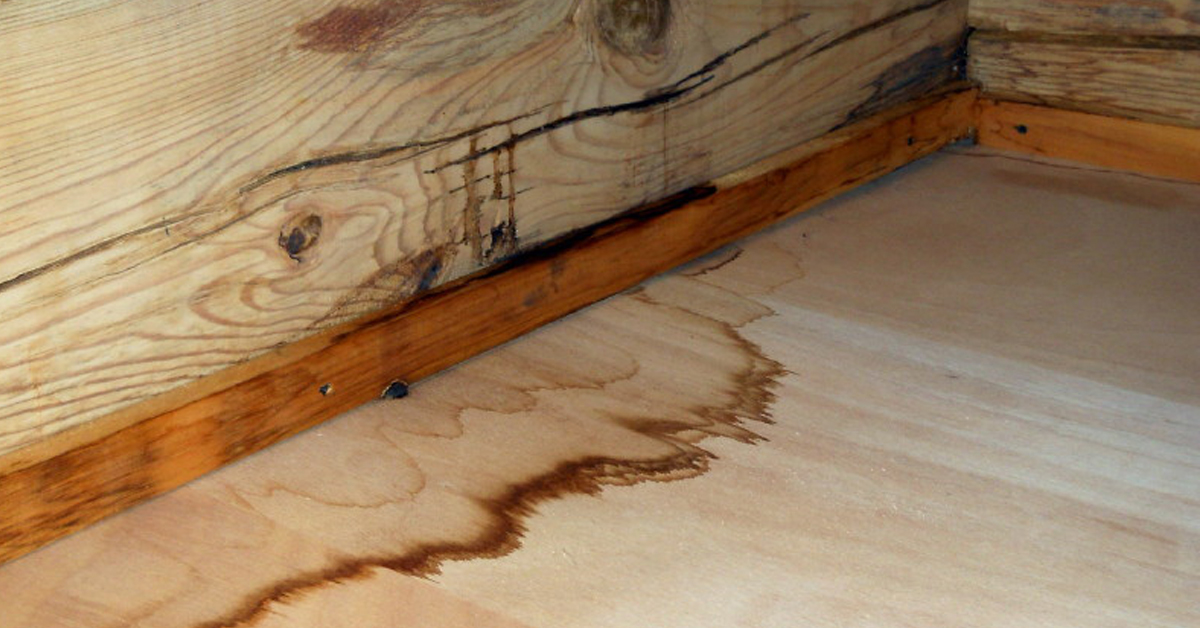
Imagine a cozy fall day. You’re in the living room sipping a cup of coffee while the rain beats down on the woods surrounding your log home. You head into the kitchen for a refill, only to step into a mystery puddle spreading on the floor. What’s going on? Where is all that water coming from?
Leaking in log homes, whether from a leaking roof or window, is an all-too-common problem. Even if you mop the water up quickly, it can leave an unsightly stain on a wooden floor. Worst of all, it’s letting moisture into a log home, and as you know, moisture is the friend of rot and the enemy of log homes!
Even if you’ve been a diligent homeowner and applied caulking around the windows, leaks may still occur. So let’s talk about stopping leaking – and rot – in its tracks to ensure your log home stays water-tight all year long. Here’s more information to help you repair leaking in log homes.
If your log home is chinked, the leaking may be caused by a gap in the chinking where the seal has been broken along the chink line. Even a narrow gap can cause problems. It is important to check all the chink lines in the area surrounding the leak.
Water that gets into a log through a crack on the up-side can travel along the log and exit away from the crack. These are often tricky to detect. Sometimes, the leaking is due to cracked or failed caulking.
Water can travel along a log until it finds a way into your home, so don’t just check the immediate area on the other side of the wall. It could be coming from somewhere above and traveling down the logs.
Sometimes, applying chinking or caulking just around the window where a leak occurs is not enough. The leak may be coming from above the window and getting behind the trim or into the space between the outer caulking and the inside of the logs.
One effective solution is to remove the exterior trim and apply caulking directly against the window jambs. If the leak seems to be coming from the top of the window, the leak probably originated from the logs above the window. Check the chink line to see if the seal has been broken.
If these remedies don’t fix the problem, a more drastic solution may be in order. You may need to remove all the trim. Then, the entire wall may be chinked or caulked in combination with flashing above the window’s header trim. Click here for more information about applying chinking and caulking.
A basic part of log home maintenance is filling checks with caulk when they meet these conditions:
Water leaking into your home is a problem you can’t wait to solve. Remember that if water is getting in, air is leaking out – and that can lead to higher heating or electricity bills in winter. Take time now to fix leaks or call in the professionals if you don’t have time to repair your log home yourself.
Do you need help with leaking in your log home? Contact Edmunds Log Home Restoration today.