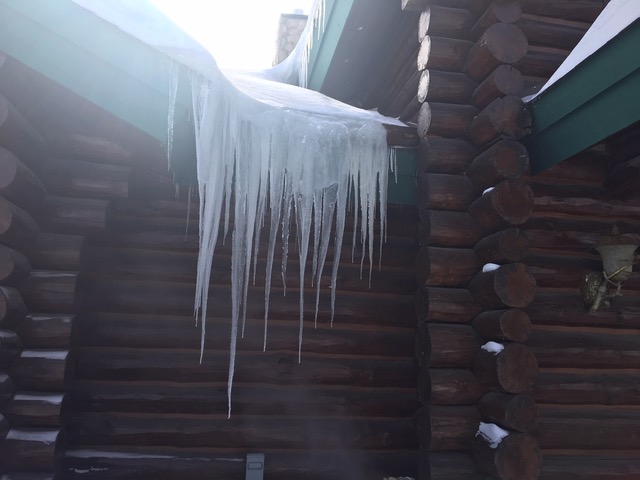
With the extreme midwestern winter we are seeing all sorts of problems with ice dams and log homes. Many log homes have rooflines with valleys and dormers that intersect in myriad ways. While these make a home appear interesting and unique, they may not have been the best choices for managing water in winter or summer. (Just how log homes are getting designed and have been designed may be a subject for another day….)
Today, I’d like to talk about what to do if you have one of these problem areas where water or ice can get into a valley. This may cause a leak.
This winter is the perfect time to inspect how your home is performing. When snow is deep and temperatures stay low, it creates ideal conditions to spot potential issues. Taking a careful walk around your house and checking the roof for signs of ice damming can reveal problems that only show up in cold weather.
It’s also important to remember that a roof can “leak” without any visible signs inside your living space. Water may be slipping into the attic or seeping beneath the roof sheathing long before it becomes noticeable indoors. Catching these issues early—while the snow and ice are still present—can help prevent more serious damage later.
Next, decide if you have a problem. Is this buildup of ice and snow an issue? In the photo above, it may not be an issue. The ice is not built up too thick at the edge of the roof, and it is not over towards the dormer/log corner (to the right in the photo), where it would come against the flashing and the log corner; both places we don’t want water to go.
Below is an example of a roof area that definitely needs attention. Water is running down the log wall. This situation has been developing for years, evidenced by the fact that rot is present.
The problem: Roof flashing around a valley and an upper dormer is failing, and water has been allowed to seep behind the flashing and run down the wall for some time. What to do?

The first step is to decide where the leak is coming from. Having a contractor or home inspector look at it is always a good idea. For the repair, the first step is to remove offending roofing/flashing and insulation, and repair it along with any log rot. Only after all the rot is repaired do you replace the roofing/insulation and flashing and seal the area up. There are two important steps to take prior to the planning of the repair and at the closing of any repair project, such as this.
Ask yourself, is this situation fixed, or will it be fixed if the plan is executed? Will the problem return in the area that is flashed/insulated, roofed, and guttered, just as it was before? If the answer is yes, another solution must be considered.
Test the area. Once the repair and or modification is complete, testing for leaks is important. There are two ways to do this. With a garden hose, spray the area well and see how the water runs down the problem area. The second way is to wait for a good rain and go outside and look at it.
Pro Tip: Take a video of the water coming off the roof and show it to your contractor. This will help in determining that the fix is good.

For more about leaking and more problems log home owners run into, check out our log home problems section about logs with cracks:
Log Home Maintenance: Caulking Cracks and Checks in Logs Log home maintenance tasks are typically done in the summer. Here…
August 8, 2013
Common Problems with “Middle-Aged” Log Homes We have restored log homes in the upper Midwest for over 30 years and…
May 15, 2012
How to Repair Leaking in Log Homes Imagine a cozy fall day. You’re in the living room sipping a cup…
October 13, 2015