Log home settling can be upsetting, but when you understand why log homes settle and shrink, you can take action.
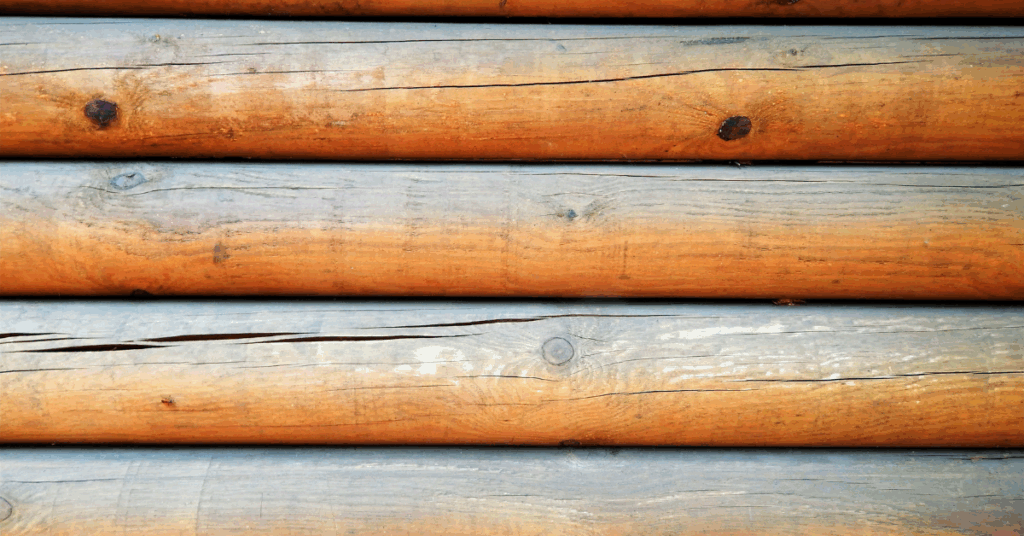
Why do log homes settle and shrink? Think about what they are made from: wood. Wood is a natural, living material. Trees contain an abundance of water in their tissues and sap. After they are cut to make logs for log homes, some of this water evaporates during the curing process. But not all of it goes away. That’s why log homes settle and shrink.
This movement affects doors, windows, and structural integrity. Here’s how shrinkage affects homes, and how skilled restoration can fix homes affected by too much settling or shrinking.
Freshly cut logs contain plenty of moisture. As they’re seasoned before using them to build log homes, they lose some of that water. But they can’t lose it entirely. Some water still remains inside the wood. As water continues to evaporate, it can cause logs to shrink, leading to settling.
Interestingly enough, most of the shrinkage of wood occurs in a relatively narrow range of moisture content. Depending on the species of wood, this is between 10% and 20% moisture content. Also, wood only significantly shrinks in diameter, not in length. This is why we have to account for settling when comparing vertical wood to horizontal wood.
As the logs lose water, they lose volume. Their own weight compresses them. This vertical settlement can measure several inches in a full-height wall. Homes built with green (unseasoned) logs settle more than those built with kiln-dried or engineered logs.
Over time, settling can create structural issues. The log home experts at Edmunds Log Home Restoration can inspect your log home to identify the causes of problems and the best way to fix them.
If you notice doors or windows sticking or doors unable to close entirely, that can be a sign of shrinking. Gaps can form below or above window frames, too.
Shrinking logs can create visible gaps. This lets in air and water, while allowing heat to escape. And as you know, moisture in log homes invites rot, and that invites insects. Re-chinking seals up the gaps to prevent small problems from becoming big headaches.
If settling isn’t properly managed, the downward movement of walls can place stress on roof trusses, support posts, and interior partitions. This can lead to sagging, cracking, or structural imbalance. Log home specialists routinely inspect these areas to ensure the home remains stable.
Did you know that protective finishes shield logs from UV rays, moisture, and insects? Restoration professionals choose the right products and apply them correctly to extend the life of the wood. The right products not only beautify your home, but they also protect the logs.
Log homes are beautiful, but they require specialized knowledge to maintain. Log home restoration specialists have the knowledge, skill, and specialized experience to do it right. By working with seasoned log home experts, homeowners can ensure their log home remains sturdy, efficient, and beautiful, no matter how the wood evolves over time.
Contact Edmunds Log Home Restoration if you’ve noticed log home settling or shrinking. We can help figure out what’s causing it and create a plan to fix it.