Wood‑boring insects such as carpenter ants and powderpost beetles are common in log homes, especially when moisture or rot is present. These insects create small holes and fine dust, but they are usually a symptom of underlying wood deterioration rather than the primary cause. Carpenter ants typically target rotting or damp logs, while powderpost beetles leave smaller holes and rarely cause structural damage.
The article outlines a two‑step approach for homeowners: first, eliminate the active insects using store‑bought treatments or a professional exterminator; second, address the root cause by repairing or replacing any rotting logs and removing nearby sources of decaying wood, such as firewood piles or stumps. Long‑term prevention depends on resolving moisture issues and ensuring no rotten wood remains around the home.
Have you noticed tiny holes in your log home? Do you or family members hear chewing sounds inside your logs? Are there piles of dust inside your logs? All of these are signs that boring insects have found their way into your log home or cabin. The good news is you can take action against them to deal with the damage they can inflict.
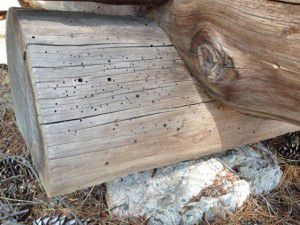
In the Midwest, common boring insects are carpenter ants and the powderpost beetle. These insects bore into your home leaving in their path small holes in the logs and a bit of dust. They feed on deteriorating wood, so this really makes them a symptom more than a problem in and of themselves.
The most common insect in log homes is the carpenter ant. The carpenter ant infests wood that is rotting, although they do not cause the rot. The holes these carpenter ants bore are about 1/4″ in diameter or the size of a pencil.
Powderpost beetles are also common in log homes, but they don’t generally do structural damage and are most times not the best indicator of rotting wood. Their holes are the size of a pencil lead. Neither of these insects do structural damage to the logs themselves but carpenter ants may be a warning sign to you that your logs are getting wet or have some rot in them.
Have you found signs of wood-boring insects in your home? Here are some steps you can follow:
The wood-boring insects we have in the Northern part of the country are attracted to rotten wood. Are there any rotten logs that are close to the infested area? Is there a pile of firewood or a rotting tree stump that may be attracting them to a particular area of the house?
If there are rotten logs involved, they need to be fixed. If a pile of rotten wood or a rotting stump is the problem – then these issues will need to be addressed, as well. You don’t want any rotten wood around your log home.
If you discover that there are rotten spots on your logs, it is likely that the rotten area(s) of the log needs replacing to resolve the problem. Once rot starts to develop in a log, it will continue to rot unless it is repaired/replaced. Contact us for an appointment.
The more breathable the wall is, the less likely that you will develop problems due to moisture building up in your log walls.
February 1, 2019
We often get calls from people who are looking at purchasing a log home for the first time. A common…
January 3, 2019
This chinking and repair project was located near Madison, Wisconsin. Ken and Kay Uecker were concerned about the draftiness of…
January 18, 2019